Buyers with the lowest income purchase the most expensive properties
October 13, 2021
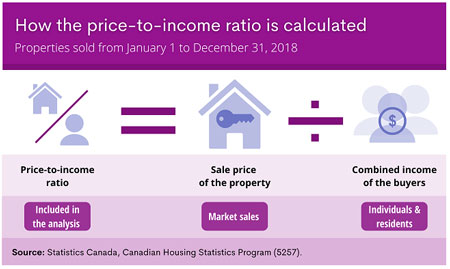
Statistics Canada recently released new insights on the real estate market by examining properties sold along with buyer characteristics in Nova Scotia, New Brunswick and British Columbia during the calendary year of 2018.
The analysis provides a new measure to evaluate housing affordability at the time of purchase and complements existing measures such as the shelter-cost-to-income ratio. By linking the sale price of a property to the income of its buyers, the price-to-income ratio provides an indication of the level of burden faced by buyers when purchasing residential real estate. The price-to-income ratio can be examined over time, with these findings serving as a point of comparison to quantify the effects of COVID-19 on housing affordability.
Buyers in the lowest income quintile purchased properties with the highest median price-to-income ratio in 2018—especially in Vancouver. Income quintiles divide buyers into five equal groups based on their incomes; quintiles are calculated independently for each province.
Of note, the lowest-income earners purchased properties with a ratio over four times higher in British Columbia than in Nova Scotia and New Brunswick.
Buyers who earned the lowest income were older than buyers in other income quintiles. This was most evident in British Columbia where the median age of buyers in the lowest quintile was 50, while those in the third and fourth quintiles had a median age of 41. Additionally, buyers in the lowest income quintile were more likely to be repeat buyers in British Columbia. This suggests that buyers in this quintile may have had additional time to accumulate wealth or could have received capital gains through the sale of another property.